Our first pick is Salesforce Commerce Cloud, best for teams already inside the Salesforce ecosystem. For a different need, commercetools covers Composable, API-first commerce builds and Adobe Commerce covers B2B and B2C personalization at scale. Details, prices and limits for the rest of the 5 tools are below.
Ainotely compared 5 unified commerce platforms. The goal is a practical shortlist: published prices, free plan facts, best-fit use cases and honest limits for every entry.
Key takeaways
Top of the list is Salesforce Commerce Cloud, which targets teams already inside the Salesforce ecosystem.
Check the limits for commercetools before you commit: you assemble the frontend.
For enterprise commerce on a managed foundation, Shopify Plus is worth a look.
Shopware stands alone as the one tool in this list with a free plan.
Best for: Teams already inside the Salesforce ecosystem
Salesforce Commerce Cloud serves teams already inside the Salesforce ecosystem. Salesforce Commerce Cloud is Salesforce's commerce offering, geared toward enterprises that want buying experiences connected to their broader customer system.
More specifically, large, multi-brand retailers are the usual audience. Salesforce Commerce Cloud shows no starting price here, so confirm the cost on the vendor site. Trial and free access: Not stated.
For Composable, API-first commerce builds, commercetools is a natural candidate. commercetools calls itself the digital commerce AI company, offering enterprise commerce infrastructure for AI agents that runs experiences across online, in-store, in-chat and agent-to-agent channels from one unified engine. In practice, since the engine is infrastructure, you own more of the assembly: frontend, integrations and operational tooling.
Retailers planning conversational and agent-driven touchpoints should look closely. Choose commercetools when architectural freedom and multi-channel reach justify the added build effort. In practice, teams without capable engineering capacity may prefer a more packaged system. No starting price is listed for commercetools here; confirm pricing on the vendor site. Free access: Free trial.
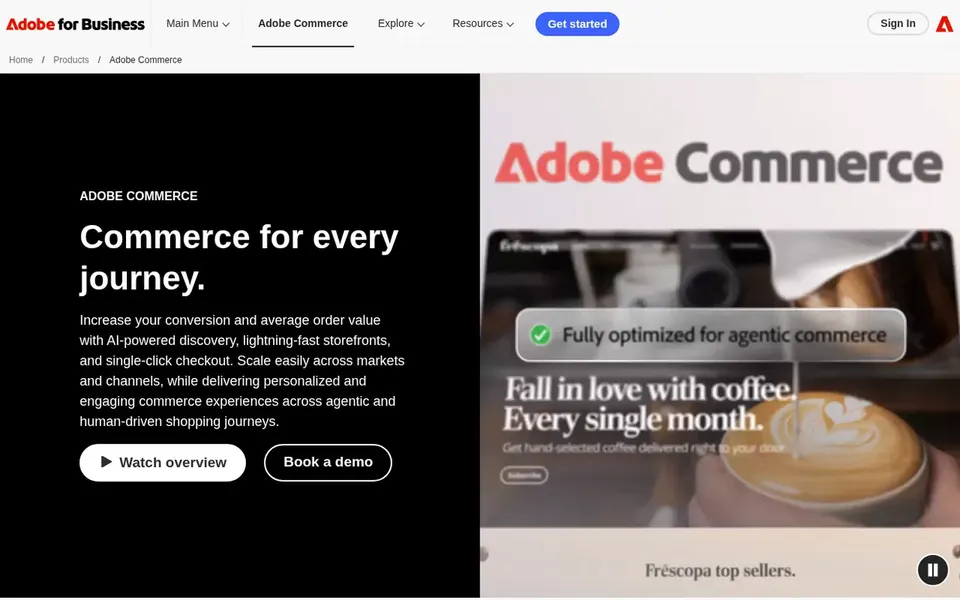
Adobe Commerce works best for B2B and B2C personalization at scale. Smaller teams without that capacity may find it heavy compared with hosted alternatives. More specifically, choose Adobe Commerce when personalization depth and composability matter more than simplicity.
In daily use, Adobe Commerce, formerly Magento, is presented as an AI-powered composable ecommerce product for B2B and B2C that gives personalized experiences at global scale. On top of that, merchants with complicated catalogs and content-driven journeys are a natural fit. This comparison lists no price for Adobe Commerce; ask the vendor. Trial and free access: Not stated.
Best for: Configurable storefronts with design control
Shopware is designed for configurable storefronts with design control. Shopware presents itself as an ecommerce product for building and customizing a completely responsive online store with a blend of design and functionality.
Pick Shopware when storefront adaptability and design fidelity are central to your commerce differentiation. On top of that, for very large global enterprises with deep composable requirements, other choices may offer broader infrastructure scope. Pricing for Shopware is not stated here, so ask the vendor for current figures. A free plan is available with Shopware.
Best for: Enterprise commerce on a managed foundation
Choose Shopify Plus for enterprise commerce on a managed foundation. Shopify Plus is the enterprise level of Shopify, positioned as a commerce system for ambitious brands with plans designed for scale.
As for the details, the tradeoff is depth: highly bespoke backend logic and unusual data models can strain a hosted product. As for the details, choose Shopify Plus when speed to market and operational simplicity outweigh fine-grained control. Shopify Plus shows no starting price here, so confirm the cost on the vendor site. Trial and free access: Not stated.
Ask each vendor, from Salesforce Commerce Cloud to Shopify Plus, for a written quote; none of them publishes a starting price.
Test the free plan from Shopware against your real workload before relying on it.
Take the trial from commercetools and push a live task through it before you pay.
Read the limits listed for Salesforce Commerce Cloud first: ecosystem lock-in risk.
Look at the renewal terms for Shopify Plus: auto-renewal, notice periods and price changes can matter more than the first-year price.
Involve the people who will use Shopware daily; a short pilot beats a long feature checklist.
How we picked
Each tool was reviewed on what its vendor publishes: price, plan limits, core features and stated drawbacks. We did not run hands-on tests. Where a price is missing, the vendor does not list one publicly or ties it to a quote. Always confirm before budgeting. The sequence is a judgement call: typical use case first, then pricing transparency, then free access. Use the profiles to check fit. That approach shaped the order of the 5 unified commerce platforms tools listed here.
Every price and plan detail on this page comes from the vendors’ own websites. We did not run hands-on tests unless the text says so, and we do not publish star ratings or review scores. See how we score and our disclosure.
Keep your shortlist in one place
Paste prices, trial dates and notes from this guide into Ainotely, our AI note app. It files them into a topic and pulls out tasks like “cancel trial by Friday”. Free 7-day trial, no card needed.
Is Salesforce Commerce Cloud the right pick for everyone comparing unified commerce platforms?
No single tool suits every team. Salesforce Commerce Cloud comes first because it fits teams already inside the Salesforce ecosystem, while commercetools suits Composable, API-first commerce builds and Adobe Commerce suits B2B and B2C personalization at scale. Match the tool to your own size, budget and workflow before deciding.
What makes a commerce system unified?
That typically means shared catalog, pricing and customer data instead of separate systems stitched together. Confirm how each vendor manages cross-channel data in practice.
How are the tools for unified commerce platforms ordered?
Salesforce Commerce Cloud sits first and Shopify Plus last because the order follows typical fit for unified commerce platforms, then price clarity and free access. It is a judgement call, so read each profile for fit and limits.
Do these tools publish their prices?
No. None of the tools, from Salesforce Commerce Cloud to Shopify Plus, shows a fixed starting price here, so budget time for quotes.
Can I try these options before paying?
Often, yes. Shopware has a free plan and commercetools offers a free trial. Use your own data and a real task during the test, and check what the free tier or trial limits before you rely on it. The 5 tool cards above repeat this per product for unified commerce platforms, with the listed price or "pricing on request".