Start with Artera if you need cross-EHR outreach automation. Luma Health fits automated patient communication; Epic MyChart fits Hospitals already on Epic. The remaining 2 options are covered below with prices and limits.
If you are comparing patient engagement software for hospitals, this page covers 5 tools in one place: what each is best for, what it costs to start, whether it has a free plan, and the main limit to know about.
Key takeaways
Artera takes the first slot, best suited to cross-EHR outreach automation.
For reducing staff messaging workload, Klara is worth a look.
Neither Artera nor Klara, nor any of the other 3 tools, has a permanent free plan; trials and quotes are the norm.
Pricing across the list, from Artera to Klara, is by quote only.
Artera comes with a trade-off: automation needs careful oversight.
Artera was built for cross-EHR outreach automation. The pitch is that manual outreach drains resources, and automation can deal with repetitive contacts.
What to check first: Automation needs careful oversight.
As for the details, Artera offers a patient communication product built around AI agents that automate calls, intake, scheduling and payments across every EHR, according to the vendor. Automatic outreach needs oversight so patients still reach a person when needed, and the benefit relies on how much manual contact your teams deal with today. This comparison lists no price for Artera; ask the vendor. On free options: Not stated.
Luma Health was built for automatic patient communication. Since messaging and scheduling are also offered inside major EHR portals, some hospitals may find overlap and have to decide which system owns each interaction.
Honest limits: Setup relies on existing workflows.
In daily use, Luma Health gives you patient communication and engagement tools targeted at automating outreach, scheduling and follow-up so staff spend less time on manual contacts. It is meant to sit alongside a hospital's existing systems and coordinate patient touchpoints. Pricing for Luma Health is not stated here, so ask the vendor for current figures. Free plan details: Not stated.
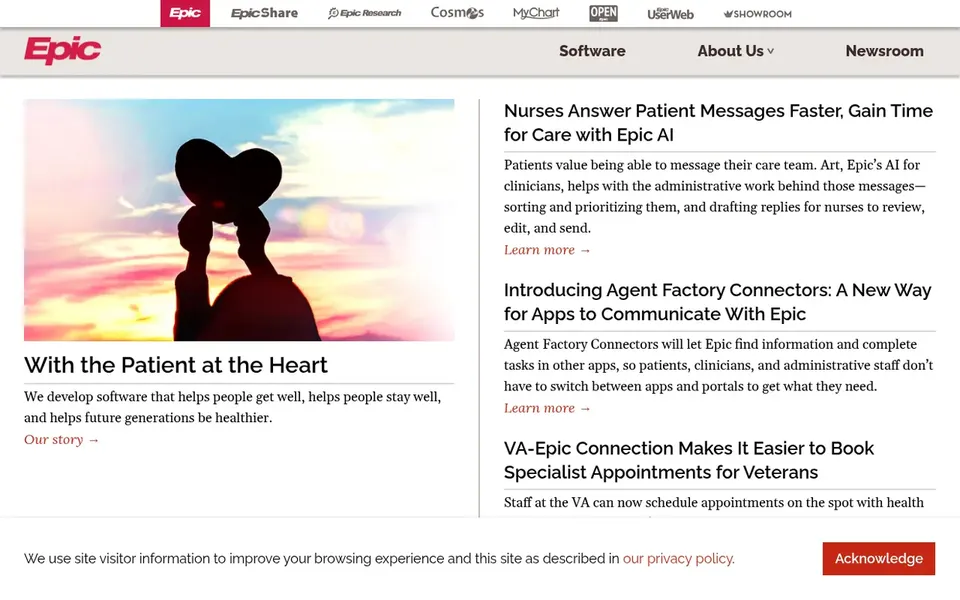
Epic MyChart makes the most sense for Hospitals already on Epic. The central limit is environment fit: organizations not on Epic will find little value here, and the experience depends heavily on how each hospital configures the portal.
Epic MyChart is the patient-facing portal connected to Epic's clinical software, which the vendor describes as built to help people get well and stay well. It provides patients a single place to view information and communicate with care teams inside the Epic ecosystem. This comparison lists no price for Epic MyChart; ask the vendor. On free options: Not stated.
Trade-offs to know: Configuration relies on the organization.
Where Phreesia fits: Patient intake and front-desk workflows. Phreesia concentrates on patient intake software, presenting itself as a way to cut no-shows and end front-desk chaos for healthcare organizations. Its tools include registration, scheduling and payment steps that patients complete before or around a visit.
The main drawbacks: Needs workflow change at the front desk.
Beyond that, Phreesia is intake-led, so hospitals looking for a full clinical portal or deep record integration may have to pair it with another system. Beyond that, staff workflows change when intake moves digital. So plan training and confirm how the tool links to your scheduling and billing systems. Phreesia shows no starting price here, so confirm the cost on the vendor site. Trial and free access: Not stated.
Think of Klara for reducing staff messaging workload. Hospitals with an established portal may see duplication in messaging and scheduling, so define which channel patients should use.
Klara, presented under ModMed Patient Engagement, aims to ease patient access and cut staff workload with tools for scheduling, digital intake and quicker payments. It supports AI-powered communication so routine patient interactions can be handled with less manual effort. No starting price is listed for Klara here; confirm pricing on the vendor site. Trial and free access: Not stated.
Drawbacks to consider: Needs clear ownership of channels.
Ask each vendor, from Artera to Klara, for a written quote; none of them publishes a starting price.
Before choosing Artera, weigh its main limit: automation needs careful oversight.
Price Epic MyChart for your actual team size; headline prices rarely include add-ons or overage.
Ask Phreesia how an export works before you move any records in; an easy exit lowers the risk.
Ask the daily users to test Luma Health on a live task before you roll it out to everyone.
How we picked
For each of the 5 tools we noted price, free plan or trial, fit for patient engagement software for hospitals and the main limit, using vendor pages and documentation. Seat minimums, billing terms and add-ons can move the real cost, so the starting prices here are a guide and not a quote. The sequence is a judgement call: typical use case first, then pricing transparency, then free access. Use the profiles to check fit.
Every price and plan detail on this page comes from the vendors’ own websites. We did not run hands-on tests unless the text says so, and we do not publish star ratings or review scores. See how we score and our disclosure.
Keep your shortlist in one place
Paste prices, trial dates and notes from this guide into Ainotely, our AI note app. It files them into a topic and pulls out tasks like “cancel trial by Friday”. Free 7-day trial, no card needed.
No. None of the tools, from Artera to Klara, shows a fixed starting price here, so budget time for quotes.
Does any tool for patient engagement software for hospitals here have a free plan?
A permanent free plan is not offered by Artera, Klara or the other tools here. Plan a short evaluation period instead.
Is Artera the right pick for everyone comparing patient engagement software for hospitals?
No single tool suits every team. Artera comes first because it fits cross-EHR outreach automation, while Luma Health suits automated patient communication and Epic MyChart suits Hospitals already on Epic. Match the tool to your own size, budget and workflow before deciding.
How do these tools cut staff workload?
Multiple choices automate routine contacts for example reminders, intake forms and scheduling, which cuts manual phone work. Klara and Artera emphasize AI-assisted communication, whereas Phreesia targets front-desk intake.
Can I try these tools before paying?
Not by default. None of the tools, from Artera to Klara, lists a free plan or a free trial here, so ask each vendor for a demo before committing. Each of the 5 options in this patient engagement software for Hospitals guide has its own card above with the price, free plan and limits.