Riffyn is the first pick on this list for process data management in R&D. Listed starting prices: LabArchives from $25 per student per term. Aqemia is the stronger choice for Physics-based AI drug discovery, while LabArchives suits modern electronic lab notebooks. All 5 tools are compared below on price, free plan and limits.
Short on time? The summary and table above give the quick view of 5 AI scientific data management systems, and the profiles that follow give the detail behind each entry.
Key takeaways
Riffyn sits first on this list: process data management in R&D.
For AI-ready scientific data intelligence, TetraScience is worth a look.
A fair warning about LabArchives: primarily notebook-focused instead of a full R&D suite.
Riffyn, Aqemia, Benchling and TetraScience: pricing is by quote only, so plan time for a sales conversation.
None of the 5 tools, from Riffyn to TetraScience, has a free plan, so budget for a subscription or use a trial.
In short, Riffyn is for process data management in R&D. Riffyn is usually known for scientific process data management, helping teams capture and structure experimental process data so it can be reused and analyzed. In practice, consider Riffyn when structured process data and experimental traceability are central to your work.
What to check first: Restricted public detail on current AI features.
Beyond that, organizations seeking a broad ELN or a full R&D application suite should compare other choices. From a buyer's view, Riffyn's process-oriented approach may be more specialized than what general research labs need. No starting price is listed for Riffyn here; confirm pricing on the vendor site. Free plan details: Not stated.
Aqemia was built for Physics-based AI drug discovery. Organizations pursuing novel therapeutics may consider it for discovery-focused work.
Downsides: Specialized in drug discovery instead of general data management.
Aqemia is specialized in AI-driven drug discovery, so it is not a substitute for a general scientific data management system or ELN. Aqemia does not show a starting price in this comparison, so check the vendor site for current pricing. Free options: Not stated.
In short, LabArchives is for modern electronic lab notebooks. LabArchives is described as a modern electronic lab notebook that helps users easily organize, search, and share scientific data.
Points against: AI-specific data management may need other tools.
LabArchives is centered on the electronic lab notebook, so teams needing a wide application suite or advanced AI data pipelines may need extra systems. Beyond that, choose LabArchives when a capable, searchable ELN is the core need. On cost, LabArchives starts like this: $25 per student per term. Free options: Free trial.
Best for: Biology-first R&D data and collaboration
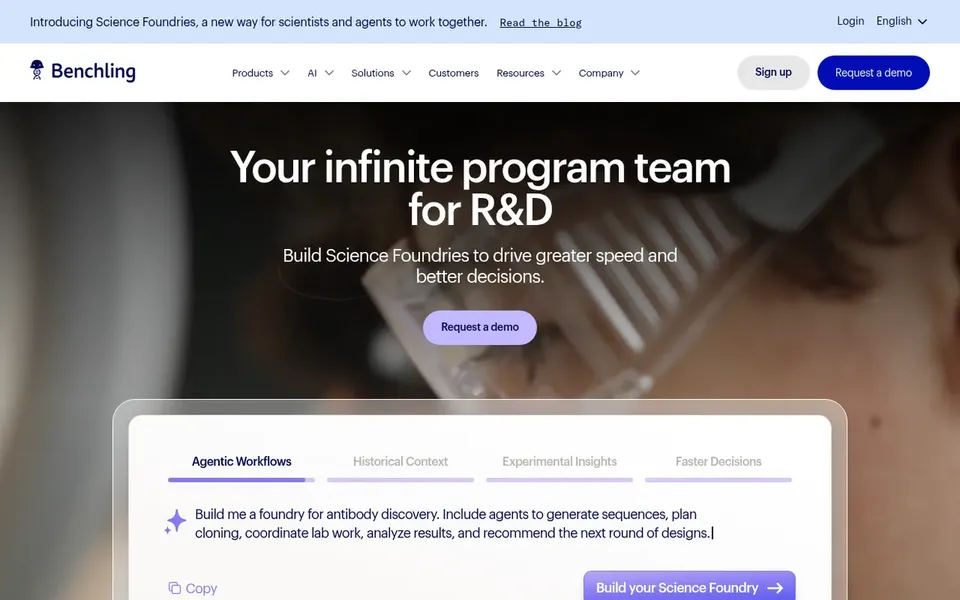
Benchling makes the most sense for biology-first R&D data and collaboration. Benchling is a cloud-based product for biotechnology research and development, described as a biology-first system for scientific data, collaboration, and insights.
Since Benchling is positioned around biology-first workflows, teams with heavy chemistry or cross-discipline needs may find other suites more aligned. More specifically, consider Benchling when biology data and team collaboration are the core requirements. Check the vendor site for Benchling pricing; none is listed in this comparison. Free plan details: Not stated.
What to check first: May be more than small labs need.
TetraScience is aimed squarely at AI-ready scientific data intelligence. TetraScience is oriented toward biopharma data infrastructure and AI readiness, so smaller labs or teams without complicated data pipelines may find it beyond their needs.
Choose TetraScience when scientific data integration and AI-ready intelligence are strategic priorities. Pricing for TetraScience is not stated here, so ask the vendor for current figures. Free options: Not stated.
Points against: May be more infrastructure than small labs need.
Get a written quote from Riffyn, Aqemia, Benchling and TetraScience; the list shows no starting price for them.
Use real work to test the free trial from LabArchives, rather than a demo project.
Read the limits listed for Riffyn first: restricted public detail on current AI features.
Compare total cost, not headline price: for Aqemia, add extra seats, add-ons and any usage-based charges.
Ask Riffyn which support channels and response times come with the plan you would buy.
How we picked
Each tool was reviewed on what its vendor publishes: price, plan limits, core features and stated drawbacks. We did not run hands-on tests. Where a price is missing, the vendor does not list one publicly or ties it to a quote. Always confirm before budgeting. Order on the page follows fit for the typical buyer first, then price transparency and free access. Your own requirements should decide the final pick. This applies to all 5 AI scientific data management systems options compared here.
Every price and plan detail on this page comes from the vendors’ own websites. We did not run hands-on tests unless the text says so, and we do not publish star ratings or review scores. See how we score and our disclosure.
Keep your shortlist in one place
Paste prices, trial dates and notes from this guide into Ainotely, our AI note app. It files them into a topic and pulls out tasks like “cancel trial by Friday”. Free 7-day trial, no card needed.
How are the tools for AI scientific data management systems ordered?
Riffyn sits first and TetraScience last because the order follows typical fit for AI scientific data management systems, then price clarity and free access. It is a judgement call, so read each profile for fit and limits.
How can biopharma teams make scientific data AI-ready?
Teams commonly need a data integration layer that converts raw instrument and experimental data into structured, analysis-ready information. TetraScience positions Tetra OS for this role in biopharma.
Does any tool for AI scientific data management systems here have a free plan?
No tool in this list, Riffyn and TetraScience included, has a permanent free plan. LabArchives offer a trial. Trials and quotes are the usual route, so plan a short evaluation period.
Can I try these options before paying?
Often, yes. LabArchives offers a free trial. Use your own data and a real task during the test, and check what the free tier or trial limits before you rely on it.
Do these tools publish their prices?
Not all of them. Riffyn, Aqemia, Benchling and TetraScience publish no starting price, so expect a quote request for those. The rest, LabArchives included, show a starting price, though seats and billing terms still change the final cost.
Can AI drug discovery tools replace a data management system?
Most organizations still need a system for capturing, organizing, and sharing experimental data. Consider discovery tools as complements to a data management foundation.