If you need virtual data rooms for closing deals, Datasite is the first tool to look at here. Listed starting prices: Affinity from $2,000 per user a year. Alternatives: Grata for agentic M&A workspace with proprietary data, and Sourcescrub for private market deal origination and research. Prices, free plans and limits for all 6 tools follow.
This Ainotely guide covers 6 options for deal sourcing software for small business. Each profile lists a starting price, free plan details, strengths and drawbacks, so you can drop poor fits quickly.
Key takeaways
Number one here is Datasite, a fit for virtual data rooms for closing deals.
Check the limits for Sourcescrub before you commit: narrower than a full M&A suite.
Affinity fits relationship-driven sourcing for private capital.
Datasite, Affinity and the 4 others all need a premium plan or a trial, since no free plan is listed.
Starting prices begin at $2,000 per user per year with Affinity.
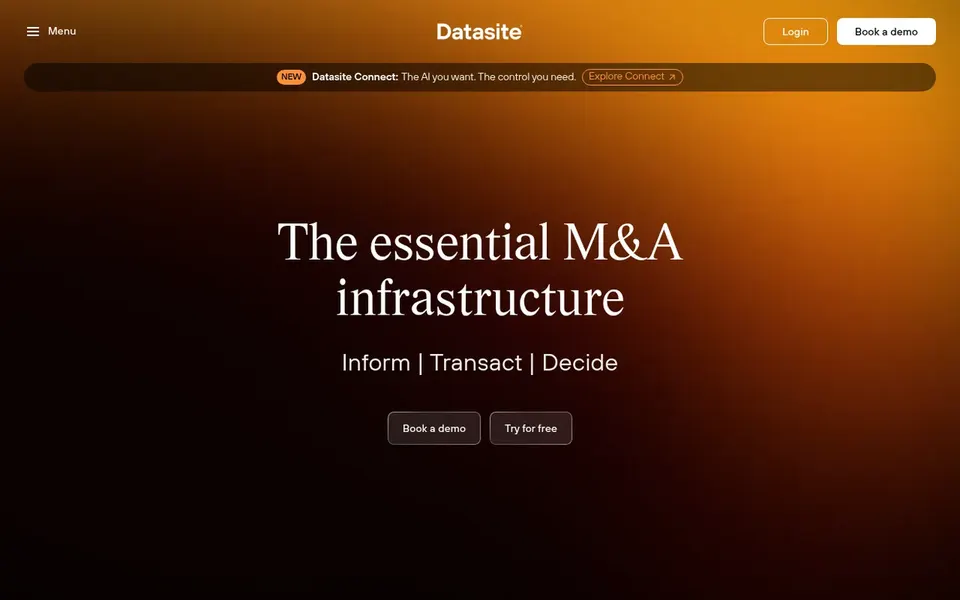
Datasite makes the most sense for virtual data rooms for closing deals. The vendor invites prospective buyers to request a demo to see the workflow.
From a buyer's view, small firms that are still generating targets should look at origination tools first and revisit data rooms when a deal is live. This comparison lists no price for Datasite; ask the vendor. Trial and free access: Not stated.
Trade-offs to know: Transaction focus may be premature for some.
Best for: Agentic M&A workspace with proprietary data
For agentic M&A workspace with proprietary data, Grata is a natural candidate. Grata presents itself as an agentic M&A workspace that merges proprietary data, context and workflows so dealmakers know where to focus. More specifically, teams wanting a more straightforward contact-centric CRM should weigh alternatives, and buyers should confirm data coverage for their specific sector on the vendor site.
More specifically, the emphasis is on doing more with better-targeted deal work. Its framing around M&A workspaces may be more than a small business needs if sourcing is occasional. Grata shows no starting price here, so confirm the cost on the vendor site. Free plan details: Not stated.
Where it falls short: Small teams may not use full depth.
Best for: Private market deal origination and research
Sourcescrub makes the most sense for private market deal origination and research. Sourcescrub describes itself as a deal sourcing platform for AI-driven investment research and deal origination. It is built to help teams source private market information, run pipelines and sync investment leads.
From a buyer's view, the product is oriented toward origination and research. So it does not cover the full transaction lifecycle on its own. In practice, small businesses and small funds that spend live finding and tracking private businesses are the natural audience, notably where origination is a recurring task instead of a one-off. Pricing for Sourcescrub is not stated here, so ask the vendor for current figures. On free options: Not stated.
Best for: Buyer-led M&A collaboration and automation
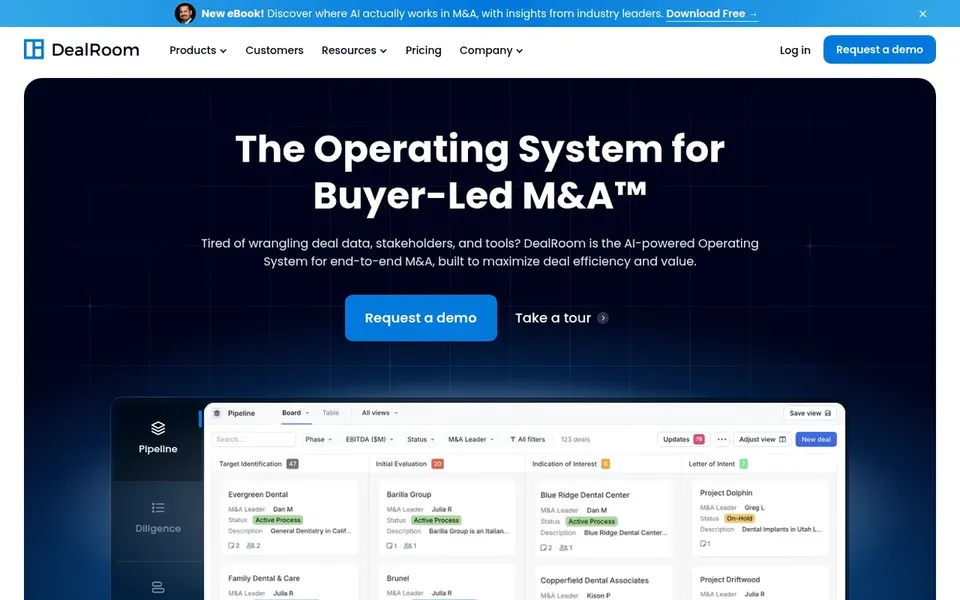
Where DealRoom fits: buyer-led M&A collaboration and automation. It is built to bring deal data, stakeholders and tools together so teams can collaborate and automate steps across the end-to-end process.
Worth adding: small firms running repeat acquisitions or structured deal pipelines fit best, especially where multiple people need shared visibility into progress and value realization. Check the vendor site for DealRoom pricing; none is listed in this comparison. As for free access: Not stated.
What to check first: M&A focus may exceed straightforward sourcing needs.
Best for: Secure due diligence and compliance management
Intralinks DealVision is designed for secure due diligence and compliance management. Small firms that expect to share sensitive documents with outside parties during a transaction are the clearest fit, especially where security and controlled access matter. Its strengths center on diligence and document security instead of early-stage deal sourcing or pipeline building.
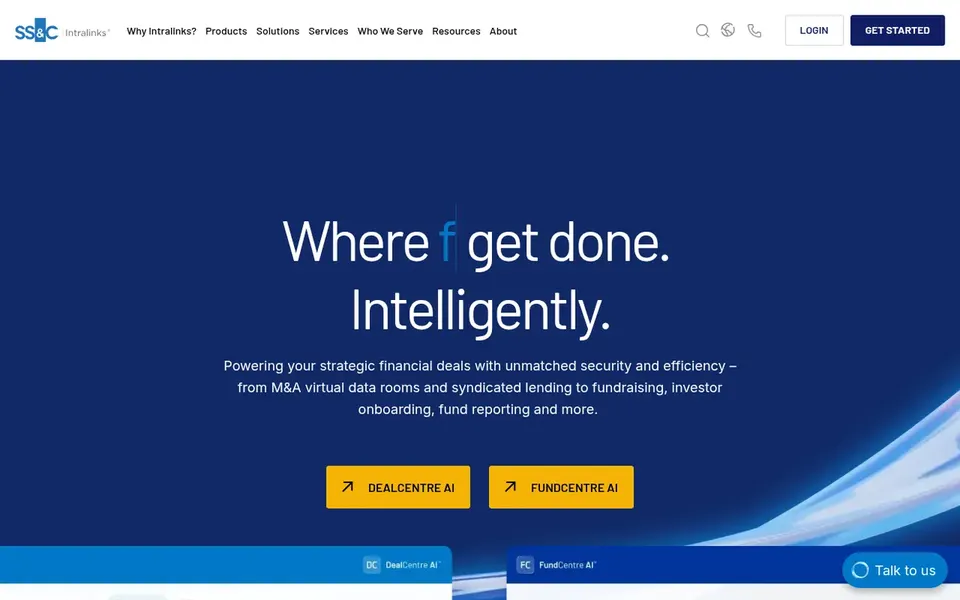
Intralinks DealVision sits within SS&C Intralinks, which positions itself around AI-powered data rooms for M&A dealmaking. The product emphasizes smooth due diligence, compliance and secure management of financial deals. No starting price is listed for Intralinks DealVision here; confirm pricing on the vendor site. As for free access: Not stated.
Best for: Relationship-driven sourcing for private capital
Affinity is aimed squarely at relationship-driven sourcing for private capital. Affinity describes its CRM as an AI-first system for private capital, helping businesses source deals, handle relationships and close quicker through relationship intelligence and automatic data capture. A small business with largely transactional, low-relationship sourcing may find a more straightforward pipeline tracker sufficient.
Watch-outs: May not handle full M&An execution.
What Affinity does well: AI-powered relationship intelligence. On top of that, Affinity is framed around private capital relationship work. So teams needing deep data room or diligence features will need extra tools. Entry price for Affinity: $2,000 per user per year. Affinity has no permanent free option.
Get a written quote from Datasite, Grata, Sourcescrub and others; the list shows no starting price for them.
Before choosing Datasite, weigh its main limit: not a sourcing or origination platform.
Confirm minimum seats and billing terms with Sourcescrub before you commit to an annual plan.
Confirm that Datasite connects to the apps your team already uses, on the plan you would actually buy.
The entry price of DealRoom is only the starting point; model the full cost with seats and extras.
How we picked
Pricing pages, product documentation and feature lists were the main sources, and every entry carries at least one honest drawback. Where a price is missing, the vendor does not list one publicly or ties it to a quote. Always confirm before budgeting. The order reflects how well each tool fits the most common buying scenario for deal sourcing software for small business, then price clarity, then free plan access. It is a starting point, not a verdict.
Every price and plan detail on this page comes from the vendors’ own websites. We did not run hands-on tests unless the text says so, and we do not publish star ratings or review scores. See how we score and our disclosure.
Keep your shortlist in one place
Paste prices, trial dates and notes from this guide into Ainotely, our AI note app. It files them into a topic and pulls out tasks like “cancel trial by Friday”. Free 7-day trial, no card needed.
Not by default. None of the tools, from Datasite to Affinity, lists a free plan or a free trial here, so ask each vendor for a demo before committing.
Does any tool for deal sourcing software for small business here have a free plan?
No tool in this list, Datasite and Affinity included, has a permanent free plan. Trials and quotes are the usual route, so plan a short evaluation period.
Do I need a virtual data room if I am only sourcing deals?
Data rooms for example Datasite and Intralinks DealVision become relevant once a transaction is live and documents must be shared securely. Numerous small companies begin with an origination or CRM tool and add a data room later.
Is Datasite the right pick for everyone comparing deal sourcing software for small business?
No single tool suits every team. Datasite comes first because it fits virtual data rooms for closing deals, while Grata suits agentic M&A workspace with proprietary data and Sourcescrub suits private market deal origination and research. Match the tool to your own size, budget and workflow before deciding.
How do relationship CRMs differ from deal sourcing systems?
Relationship CRMs like Affinity center on contact history and automatic data capture, which fits network-driven sourcing. Sourcing products for example Sourcescrub and Grata emphasize private company research and pipeline origination.
How are the tools for deal sourcing software for small business ordered?
The order follows typical fit for deal sourcing software for small business, with Datasite first and Affinity last, then price clarity and free access. It is editorial judgement, not a score, so another team could rank the tools differently.