If you need low-latency global Azure applications, Azure Cosmos DB is the first tool to look at here. For a different need, Google Cloud Firestore covers serverless apps on Google Cloud and MarkLogic covers complicated multi-model enterprise data. The remaining 2 options are covered below with prices and limits.
Ainotely compared 5 document databases. The goal is a practical shortlist: published prices, free plan facts, best-fit use cases and honest limits for every entry.
Key takeaways
This list starts with Azure Cosmos DB, which is built for low-latency global Azure applications.
2 of 5 tools offer a free plan: MongoDB Atlas, Amazon DocumentDB.
Azure Cosmos DB, Amazon DocumentDB and the 3 others all sell by quote; expect sales conversations before you see a price.
MarkLogic comes with a trade-off: enterprise focus can mean more setup.
In short, Azure Cosmos DB is for low-latency global Azure applications. Azure Cosmos DB is a completely managed, serverless NoSQL database with vector capabilities, described by Microsoft as offering high availability, scalability and low latency for modern application development.
Its distributed design means throughput and storage choices deserve careful planning before launch. This comparison lists no price for Azure Cosmos DB; ask the vendor. Free options: Not stated.
Google Cloud Firestore is designed for serverless apps on Google Cloud. Google Cloud Firestore is a completely managed, scalable, serverless document database with MongoDB compatibility, geared toward developers building rich applications without managing servers.
The main drawbacks: Best experience stays within Google Cloud.
Beyond that, teams outside Google Cloud or with complicated ad hoc query needs may find other systems a better match. Query adaptability relies on how you structure documents and indexes, so data modeling deserves early attention. This comparison lists no price for Google Cloud Firestore; ask the vendor. As for free access: Not stated.
MarkLogic was built for complicated multi-model enterprise data. Smaller teams with straightforward document needs will likely be better served by a more straightforward managed service.
Worth adding: MarkLogic is presented by Progress as a flexible, AI-ready multi-model data management system for solving complicated data challenges and unlocking more value. This comparison lists no price for MarkLogic; ask the vendor. As for free access: Free trial.
Trade-offs to know: Overkill for straightforward document apps.
Best for: General-purpose managed document workloads
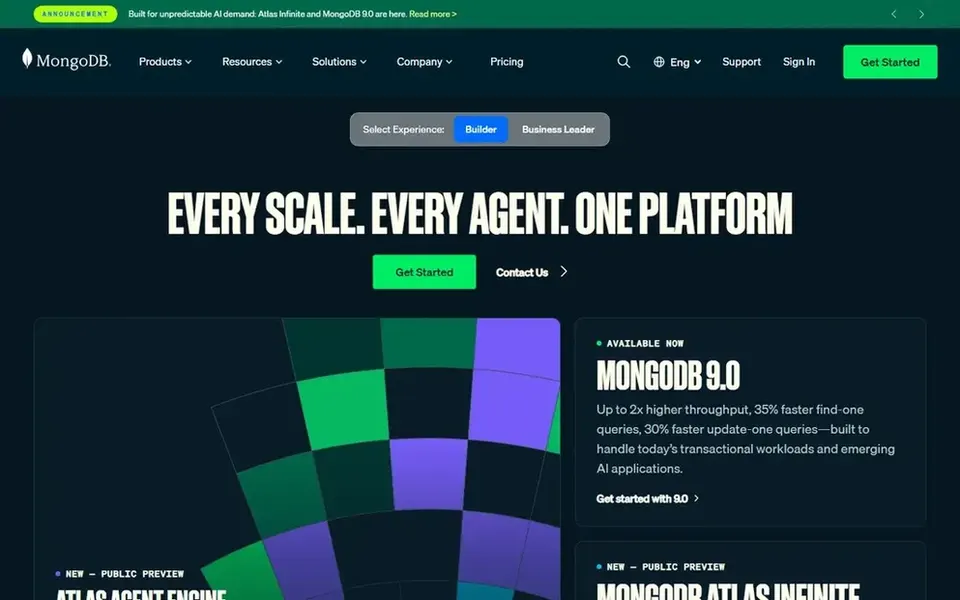
Choose MongoDB Atlas for general-purpose managed document workloads. The product's breadth means more concepts to learn, and teams with narrow key-value needs may find a more straightforward store sufficient.
Honest limits: Feature breadth can overwhelm newcomers.
MongoDB Atlas shows no starting price here, so confirm the cost on the vendor site. MongoDB Atlas includes a free tier.
Best for: AWS-native MongoDB-compatible deployments
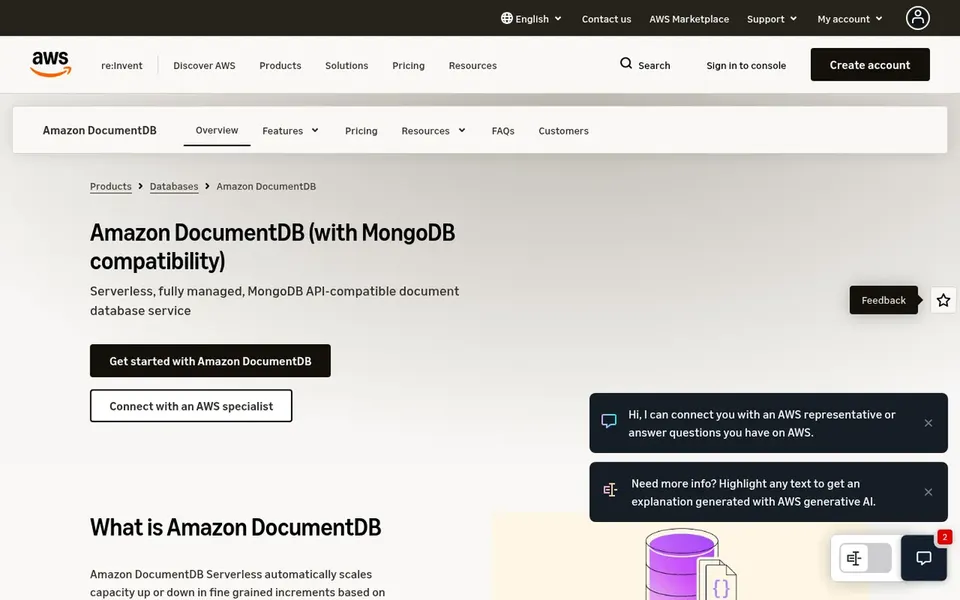
Amazon DocumentDB is built with AWS-native MongoDB-compatible deployments in mind. Since compatibility is at the API level, some MongoDB features and behaviors may differ, so validate application dependencies first.
As for the details, teams running multi-cloud or non-AWS estates may prefer a platform-neutral choice. This comparison lists no price for Amazon DocumentDB; ask the vendor. You can start on Amazon DocumentDB without paying.
Trade-offs to know: Compatibility is API-level, not identical.
Ask each vendor, from Azure Cosmos DB to Amazon DocumentDB, for a written quote; none of them publishes a starting price.
Read the fine print on the free plans from MongoDB Atlas and Amazon DocumentDB; seat, project and feature caps differ.
Use real work to test the free trial from MarkLogic, rather than a demo project.
Before choosing Azure Cosmos DB, weigh its main limit: cost behavior needs careful modeling.
Ask Google Cloud Firestore how an export works before you move any records in; an easy exit lowers the risk.
Test the integrations you rely on with Amazon DocumentDB before committing; some connectors sit on upper tiers.
How we picked
Pricing pages, product documentation and feature lists were the main sources, and every entry carries at least one honest drawback. Seat minimums, billing terms and add-ons can move the real cost, so the starting prices here are a guide and not a quote. The sequence is a judgement call: typical use case first, then pricing transparency, then free access. Use the profiles to check fit.
Every price and plan detail on this page comes from the vendors’ own websites. We did not run hands-on tests unless the text says so, and we do not publish star ratings or review scores. See how we score and our disclosure.
Keep your shortlist in one place
Paste prices, trial dates and notes from this guide into Ainotely, our AI note app. It files them into a topic and pulls out tasks like “cancel trial by Friday”. Free 7-day trial, no card needed.
Often, yes. MongoDB Atlas and Amazon DocumentDB have a free plan and MarkLogic offers a free trial. Use your own data and a real task during the test, and check what the free tier or trial limits before you rely on it.
What is a document database?
A document database keeps data as self-contained documents, commonly JSON-like, instead of rows in fixed tables. This lets developers model related data together and evolve schemas more flexibly as applications change.
Do these tools publish their prices?
No. None of the tools, from Azure Cosmos DB to Amazon DocumentDB, shows a fixed starting price here, so budget time for quotes.
Which options for document databases have a free plan?
MongoDB Atlas and Amazon DocumentDB offer a free plan in this list. Free plans usually cap users, projects or features, so check the limits on the vendor page. One other tool offers a trial instead.
How are the tools for document databases ordered?
Azure Cosmos DB sits first and Amazon DocumentDB last because the order follows typical fit for document databases, then price clarity and free access. It is a judgement call, so read each profile for fit and limits.