This list puts Medallia first for enterprise experience management programs. Listed starting prices: SurveyMonkey from $25 per user a month. PatientTrak is better for patient tracking with visit visibility, and Press Ganey is better for Healthcare-specific patient experience measurement. All 6 tools are compared below on price, free plan and limits.
Choosing patient satisfaction survey software usually comes down to price, fit and limits. This Ainotely guide sets 6 tools side by side on those three points, with the facts kept short and checkable.
Key takeaways
Medallia is the opening pick, best for enterprise experience management programs.
For contact center and CX workflows, Verint is worth a look.
SurveyMonkey is the lowest-priced starter here at $25 per user per month.
Only SurveyMonkey offers a free plan among these 6 tools.
Best for: Enterprise experience management programs
In short, Medallia is for enterprise experience management programs. Medallia offers an experience management software for collecting and acting on feedback across an organization.
Its enterprise focus means more implementation planning than a light survey tool. No starting price is listed for Medallia here; confirm pricing on the vendor site. Free plan details: Not stated.
Honest limits: Enterprise orientation may overwhelm small teams.
PatientTrak is built with patient tracking with visit visibility in mind. Clinics centred on operational flow can pair tracking with feedback collection, making it a practical choice for smaller care settings that value visit-level visibility.
Teams needing deep patient experience measurement should consider Press Ganey or Qualtrics XM for Healthcare. PatientTrak shows no starting price here, so confirm the cost on the vendor site. Free options: Not stated.
Where it falls short: Survey capability is secondary.
Best for: Healthcare-specific patient experience measurement
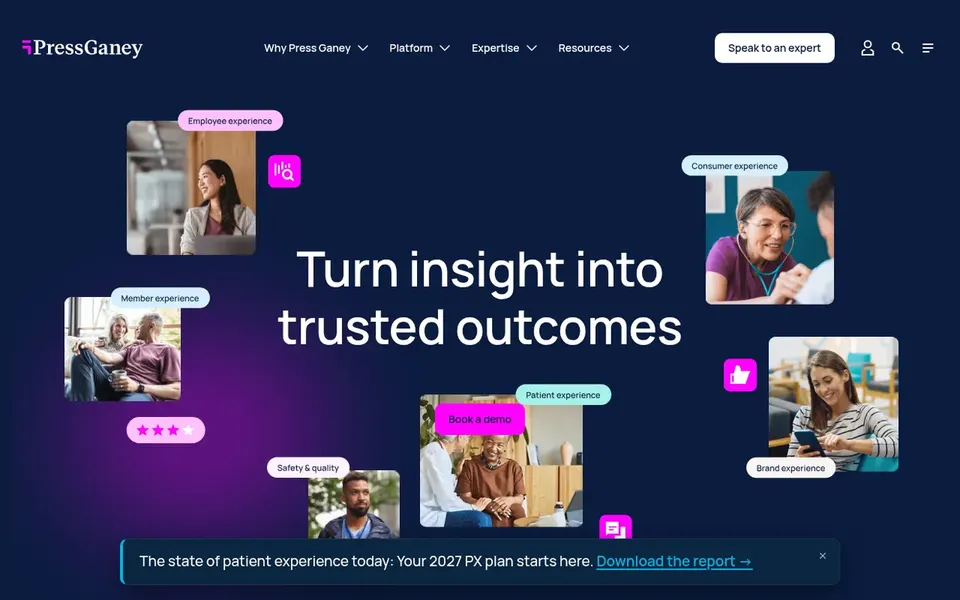
Press Ganey targets Healthcare-specific patient experience measurement. Press Ganey centers on healthcare experience, combining data, technology and guidance to help organizations understand what is happening and what to do next.
Points against: Narrower fit outside healthcare.
As for the details, groups wanting a wide, cross-industry experience product should compare Qualtrics or Medallia instead. Beyond that, since it is built around healthcare, Press Ganey may be more specialized than an organization needs for straightforward internal polls or non-clinical feedback. Check the vendor site for Press Ganey pricing; none is listed in this comparison. Free access: Not stated.
Best for: Wide experience management in healthcare
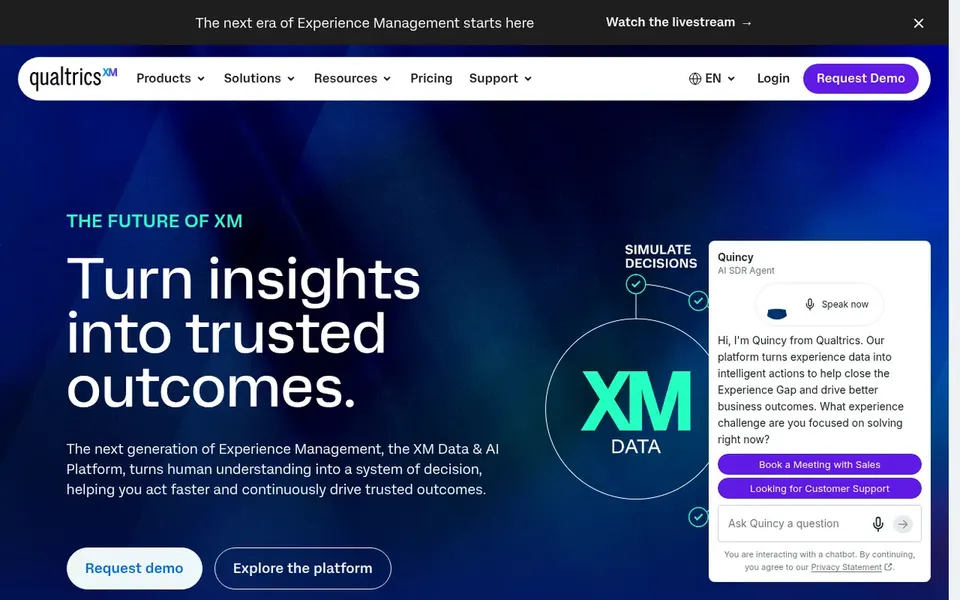
Qualtrics XM for Healthcare is designed for wide experience management in healthcare. Qualtrics XM for Healthcare applies the vendor's experience management approach to patient and employee feedback, with AI features for simulating experiences, predicting outcomes and taking action.
As for the details, a smaller clinic wanting quick, straightforward questionnaires may prefer SurveyMonkey, whereas healthcare-native measurement may point to Press Ganey. In daily use, the system's breadth means more configuration and learning than a simple survey tool needs. Pricing for Qualtrics XM for Healthcare is not stated here, so ask the vendor for current figures. Trial and free access: Not stated.
Points against: May exceed needs of small practices.
In short, SurveyMonkey is for quick, straightforward survey creation. Organizations needing clinical context and structured patient experience strategy should look at Press Ganey or Qualtrics XM for Healthcare.
Trade-offs to know: Restricted patient experience depth.
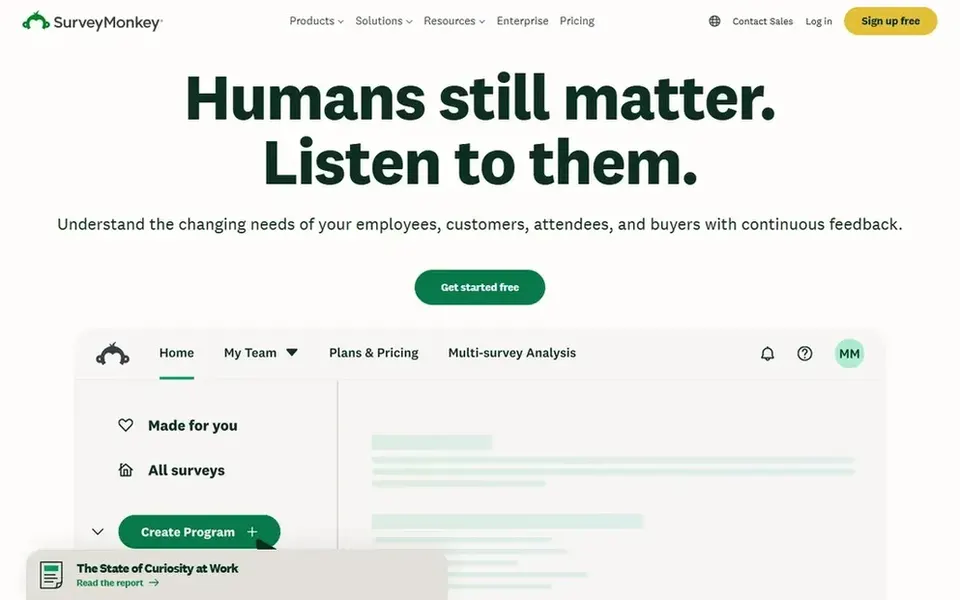
More specifically, as a general-purpose tool, SurveyMonkey does not carry healthcare-specific benchmarking or patient experience guidance. On cost, SurveyMonkey starts like this: $25 per user per month. SurveyMonkey has a free plan.
Best features of SurveyMonkey: AI and templates for surveys.
Verint works best for contact center and CX workflows. Healthcare organizations with patient contact centers can use it to link patient interactions with satisfaction and experience efforts, notably where phone and digital support channels matter.
What to check first: Best value with contact center use.
For everyday use, Verint is not a dedicated patient survey product, so survey design and patient experience measurement may need another tool alongside it. Verint shows no starting price here, so confirm the cost on the vendor site. On free options: Not stated.
Confirm the entry price on the vendor page. For Medallia, PatientTrak, Press Ganey and others that means a quote rather than a fixed price.
Look at the free plan from SurveyMonkey closely: its caps decide whether it is usable for real work.
Before choosing Medallia, weigh its main limit: enterprise orientation may overwhelm small teams.
Check the integration list for Qualtrics XM for Healthcare against the tools you run today, and note which ones need a higher plan.
Ask Press Ganey which support channels and response times come with the plan you would buy.
How we picked
We compared the tools on published pricing, free plan or trial availability, feature coverage for patient satisfaction survey software, and the limits each vendor documents. Where a price is missing, the vendor does not list one publicly or ties it to a quote. Always confirm before budgeting. Tools are placed by general fit for patient satisfaction survey software, with price clarity and free access as tie-breakers. A different team can reasonably rank them differently.
Every price and plan detail on this page comes from the vendors’ own websites. We did not run hands-on tests unless the text says so, and we do not publish star ratings or review scores. See how we score and our disclosure.
Keep your shortlist in one place
Paste prices, trial dates and notes from this guide into Ainotely, our AI note app. It files them into a topic and pulls out tasks like “cancel trial by Friday”. Free 7-day trial, no card needed.
Not all of them. Medallia, PatientTrak, Press Ganey and others publish no starting price, so expect a quote request for those. The rest, SurveyMonkey included, show a starting price, though seats and billing terms still change the final cost.
Which options for patient satisfaction survey software have a free plan?
SurveyMonkey is the only tool in this list with a free plan. Free plans usually cap users, projects or features, so check the limits on the vendor page. All 6 picks in this patient satisfaction Survey software comparison show their pricing, free plan details and main limits on the cards above.
How do contact center tools fit patient satisfaction?
Verint links contact center AI and CX workflows, which helps when patient satisfaction relies on phone and digital support interactions. It is not a dedicated survey product, so survey design may need a separate tool.
What should small clinics look for?
Small clinics should prioritize fast survey setup, clear reporting and low administrative overhead. SurveyMonkey and PatientTrak fit more straightforward operational needs, whereas Press Ganey and Qualtrics suit organizations building a structured patient experience program.
Can I try these options before paying?
Often, yes. SurveyMonkey has a free plan. Use your own data and a real task during the test, and check what the free tier or trial limits before you rely on it. For the full picture, the cards above cover all 6 entries of this patient satisfaction Survey software list, including price, free plan and limits.
Which tool is best for healthcare-specific patient surveys?
Medallia is the pick this page puts first, mainly for enterprise experience management programs. If your situation differs, PatientTrak suits patient tracking with visit visibility, and Press Ganey suits Healthcare-specific patient experience measurement. Compare price and limits before you decide.